
Checking Criminal History in Loudoun County
A sound Loudoun County criminal records check begins with the question the record must answer. Use the Virginia Judiciary Online Case Information System 2.0 for charges, hearing dates, and outcomes. Ask the arresting agency for its incident material. Call the Adult Detention Center for current local custody, then use the Virginia Department of Corrections locator only after state commitment or transfer. A Virginia State Police CCRE response is the official statewide self-review route, but it is not a copy of every Loudoun court paper.
Gather the legal name, spelling variants, likely court, date range, and any case or incident number first. A date of birth can help distinguish people with similar names when an official form permits it. Then work outward from the most specific source:
- Search OCIS 2.0 under Loudoun and choose the court level that fits the charge.
- Record the case number, charge, status, hearing, and disposition shown in the official index.
- Contact the listed clerk for the indictment, order, or certified copy that is not online.
- Request the incident or booking record from LCSO or the town police department that created it.
- Order a VSP CCRE response when a Virginia repository self-review is needed.
Four Loudoun Criminal Record Custodians
No agency holds one master public file. A police report explains the reported event and probable cause. The Adult Detention Center holds booking and custody details. A court clerk maintains accusations, hearings, orders, and the final result. VSP CCRE links qualifying fingerprint-supported arrest cycles to dispositions reported by clerks. These records serve different aims, so a gap in one source does not erase an entry in another.
| Record | Primary custodian | Best use |
|---|---|---|
| Incident or arrest report | LCSO or town police | Event facts and originating charge |
| Booking or custody file | Loudoun Adult Detention Center | Intake and current local custody |
| Criminal case file | General District, J&DR, or Circuit clerk | Filed charge, hearings, disposition, and sentence |
| Virginia criminal history | VSP CCRE | Reported statewide arrest and disposition cycles |
That split is why a complete Loudoun County search often requires both an online index and a direct request. The clerk can confirm the court result, while the agency that made the arrest controls its own report.
Virginia Official Background Checks
The Virginia Department of State Police, Criminal Justice Information Services Division, Central Criminal Records Exchange is the state repository. For personal review, start with the VSP criminal-history forms. The SP-167 generator collects subject and requester details, the desired search product, signatures, and the notary block. After confirming the entries, generate and print the form, complete the required signature and notarization, then mail it with payment. Results are mailed. This is not an unrestricted instant name-results portal.
The VSP instructions list a Virginia criminal-history name search at $15, a combined criminal-history and registry search at $20, and a registry-only search at $15. Authorized national checks follow different rules and may require fingerprints. Local law enforcement can provide fingerprint service information; Virginia law caps voluntary fingerprinting at $10 for the first set and $5 for each added set.
| Official product | Fee | Key requirement |
|---|---|---|
| Virginia criminal history | $15 | Completed SP-167 and usual notarized subject signature |
| History plus registry | $20 | Combined selection on the official form |
| Registry-only SP-266 | $15 | Registry search selection |
| Voluntary fingerprints | Up to $10 first set | Confirm local appointment and service location |
The official VSP forms screen shows where Loudoun County residents begin that mailed process.
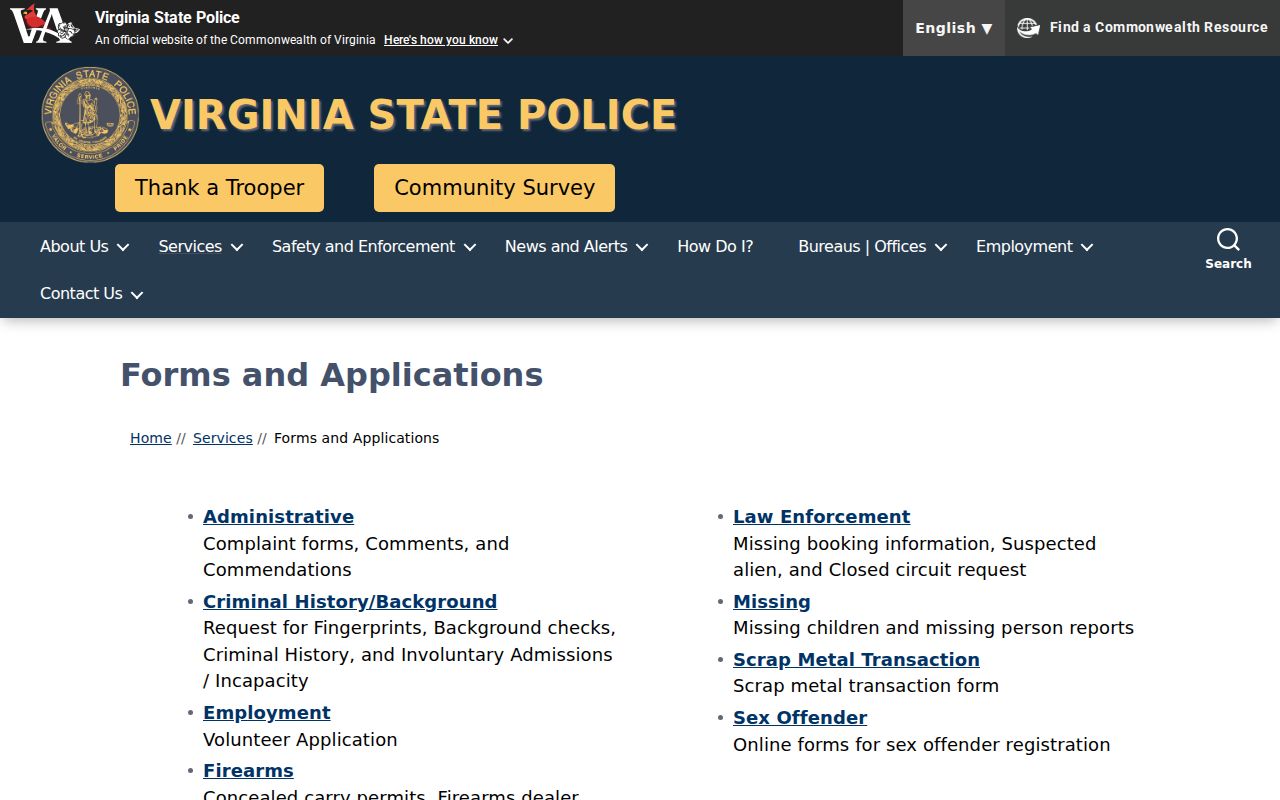
The image helps distinguish the state repository form route from a county court case search.
Loudoun Criminal Records Portal Split
LCSO changed a key access step on July 1, 2025. Sheriff records moved to a separate request-management system. A person with an older County Public Records Request Center account must create another account in the Sheriff’s Office Request Center. The county portal remains relevant for non-sheriff county records. Choosing the wrong portal can delay a request even when the record description is clear.
Virginia FOIA also permits requests by mail, email, telephone, fax, or in person. A written request is still useful because it fixes the date range, incident number, format, and cost-estimate request in one place. Ask for an existing record with reasonable specificity. The law does not require an agency to answer a broad question or create a report that does not exist.
The LCSO request instructions document each channel and the separate-account rule.
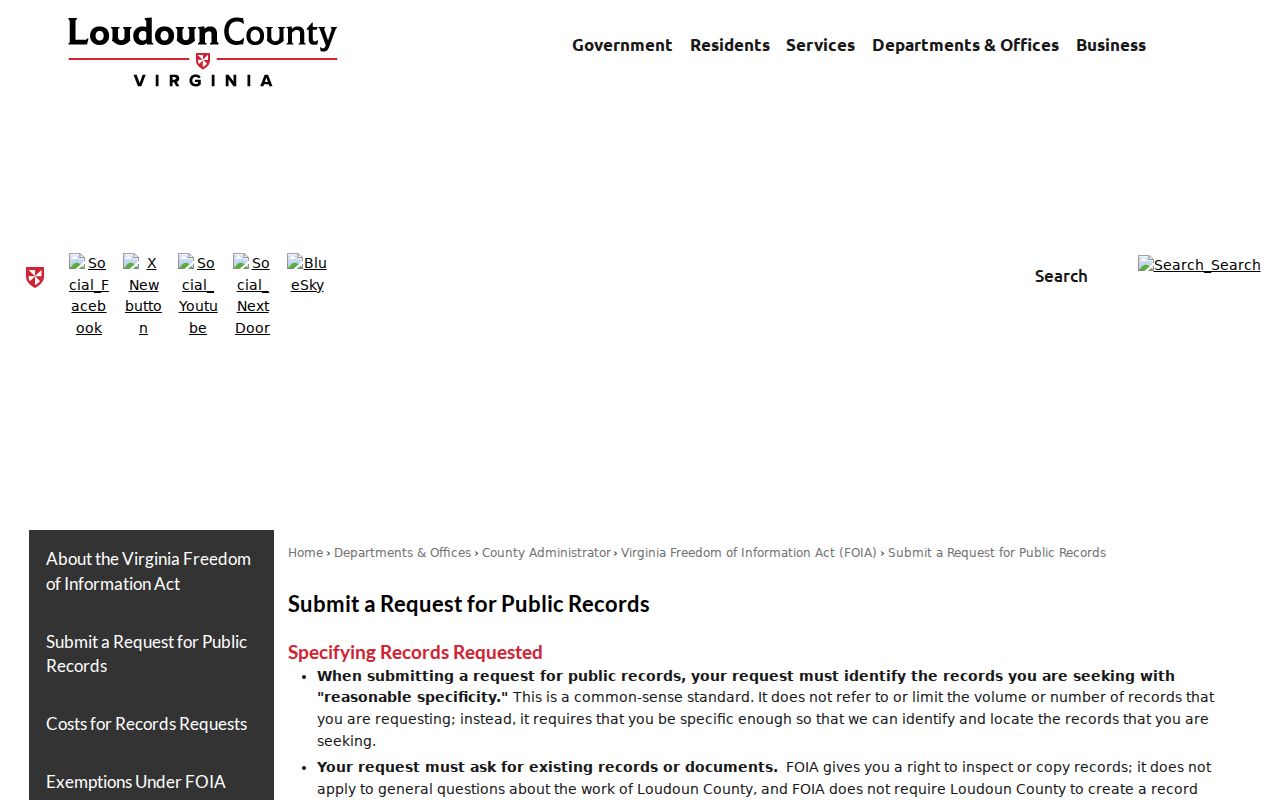
Use that official page to confirm the live submission route before sending a sheriff records request.
Criminal Record Types
Terms that sound alike can describe very different Loudoun County records. An incident report belongs to the investigating agency. A booking sheet is an intake snapshot. A docket follows the filed case. A CCRE history combines qualifying reported events across Virginia. The VADOC locator covers state custody and certain supervisees, while the registry covers only people with statutory registration duties.
- Incident summary
- The limited LCSO product that can state the case number, date and time, deputy, location, property, and event nature.
- Disposition
- The court result, such as guilty, dismissed, nolle prosequi, deferred, or not guilty.
- Booking record
- The jail intake file created after an arrest, separate from proof of guilt.
- CCRE history
- The Virginia repository record built from reported arrest and disposition cycles.
- Capias
- Court process that can authorize arrest, often tied to a missed appearance or alleged violation.
Use the record name in a request. Asking for “everything” may trigger a costly search and still miss a file held by another custodian.
Loudoun Arrest and Custody Chain
LCSO does not publish a verified conventional web jail roster or daily booking log. For fresh custody, call the Adult Detention Center at 703-777-0405. Next, search OCIS for a newly opened Loudoun case and bond entry. A specific sheriff records request can seek releasable booking information. The VADOC Inmate & Supervisee Locator becomes useful after state commitment or when the person falls under VADOC authority. A failed VADOC name search does not show that a new county arrest never occurred.
Record flow: Arresting agency › Adult Detention Center and magistrate › Loudoun court › VSP CCRE › VADOC when state custody or supervision applies.
The official Loudoun County Sheriff’s Office gateway identifies current LCSO services and records directions.
The sheriff’s official gateway is the correct starting point for current LCSO services, alerts, and records directions.
Loudoun’s custody system also includes a Work Release Center with space for 96 minimum-security, nonviolent participants nearing release. Participants pay $12 per day and may apply earnings to fines, court costs, restitution, and family support. Those program facts describe Loudoun corrections operations, not a separate public inmate search. A court order or custody contact remains necessary when the question concerns one person’s placement, eligibility, or release terms.
Inside a Loudoun County Criminal Record
A court index can show a name, court, case number, charge, filing or arrest date, hearing events, status, counsel, disposition, and sentence data. The paper or electronic clerk file may add the warrant, indictment, plea order, sentencing order, and other public documents. A repository history can add aliases, demographic descriptors, fingerprint transaction identifiers, arresting agency, final charge, and later correction or expungement notes.
| Name and identifiers | Displayed name, aliases where reported, limited demographic data, and agency or state identifiers. |
|---|---|
| Arrest and booking | Arrest date, agency, intake reference, starting charges, and custody link where releasable. |
| Charges and statutes | Filed description, Virginia code section, class, and any amended charge. |
| Disposition | Guilty, dismissed, nolle prosequi, acquitted, deferred, or another recorded outcome. |
| Sentence | Confinement, suspended time, probation, fine, costs, and restitution when the system exposes them. |
| Restrictions | Sealed, juvenile, victim, medical, and protected identity data are limited or absent. |
Identity matching still matters. Compare the court number, charge, dates, and agency rather than relying on a name alone.
Loudoun Criminal Court Routes
General District Court tries most misdemeanors and conducts preliminary felony hearings. A certified felony moves through the grand jury to Loudoun Circuit Court for trial or plea. Circuit Court also hears district appeals anew. Juvenile and Domestic Relations District Court handles specified adult family or household criminal matters, but juvenile case data is confidential and does not appear in the public online system.
Circuit Court Clerk
18 E. Market St., third floor
Leesburg, VA 20178
703-777-0270
Weekdays, 8:00 a.m. to 4:00 p.m.
General District Court
2 Church St. NE
Leesburg, VA 20176
703-777-0312
Weekdays, 8:00 a.m. to 4:00 p.m.
J&DR District Court
18 E. Market St.
Leesburg, VA 20176
703-777-0300
Weekdays, 8:00 a.m. to 4:00 p.m.
For docket fields and filed outcomes, continue with the full Loudoun County criminal court case search.
Public Access Laws in Virginia
Virginia law separates executive-agency records, court files, repository histories, and protected records. VFOIA provides a request process for qualifying public records and generally calls for a response within five working days. The office may produce the record, cite an exemption, report that it cannot find the record, or invoke added time when the statute permits. Actual search and copy costs may apply, and a requester may ask for an estimate before work begins.
Key Virginia laws:
Va. Code §2.2-3700 et seq. sets the VFOIA access policy and request framework.
Va. Code §19.2-389 controls dissemination of criminal-history record information.
Va. Code §19.2-390 requires qualifying fingerprint and disposition reports to CCRE.
Va. Code §19.2-392.3 limits access after expungement.
Court clerks follow judicial and specific statutory access rules, so ask the clerk for a case file instead of sending that request as ordinary county FOIA correspondence.
Loudoun Criminal Case Search Fields
OCIS 2.0 is the free statewide index for adult criminal cases in J&DR courts, criminal and traffic matters in general district courts, and participating circuit courts. Accept the disclaimer, choose Loudoun and the correct court level, then search by a supported mode. Payments are not made in the search system. Older material, a nonparticipating circuit entry, and the underlying filed document may require a clerk request.
| Field | Use | Search note |
|---|---|---|
| Court level and locality | Choose the record set | Select Loudoun where offered |
| Name | Party search | Try legal spelling and known variants |
| Case number | Direct match | Use the court-assigned number |
| Hearing date | Docket search | Available where the interface supports it |
| Case type or status | Narrow results | Use criminal, traffic, and shown status filters |
The OCIS 2.0 landing page is the official statewide entry point. Save the displayed case number before asking the clerk for papers.
Sealed, Expunged, and Restricted Records
Under the version of Virginia Code §19.2-392.2 effective before December 1, 2026, certain acquittals, nolle prosequi results, dismissals, and mistaken-identity matters may support an expungement petition. The filing goes to the circuit court where the charge ended. The petition identifies the arrest, agency, charge, outcome, date of birth, and name used at arrest, and it asks CCRE to send the Virginia history to the court under seal.
Virginia’s newer sealing framework has staged effective dates. Petition and automatic paths are not interchangeable, and excluded offenses remain. Registry offenses, listed violent or firearm matters, protective-order violations, and other categories can fall outside relief. Check the effective version before relying on a rule. Juvenile material and sealed files may be absent from a public search even though an authorized custodian still retains a restricted record.
Loudoun Corrections and Supervision Records
The VADOC Inmate & Supervisee Locator can search by name or a seven-digit DOC number, then narrow by location, race, gender, or age range. VADOC updates the tool daily but warns that information can be inaccurate or stale. It covers state institutions, certain local or regional jail residents under VADOC authority, probationers, parolees, institutional hospital patients, and Community Corrections Alternative Program participants.
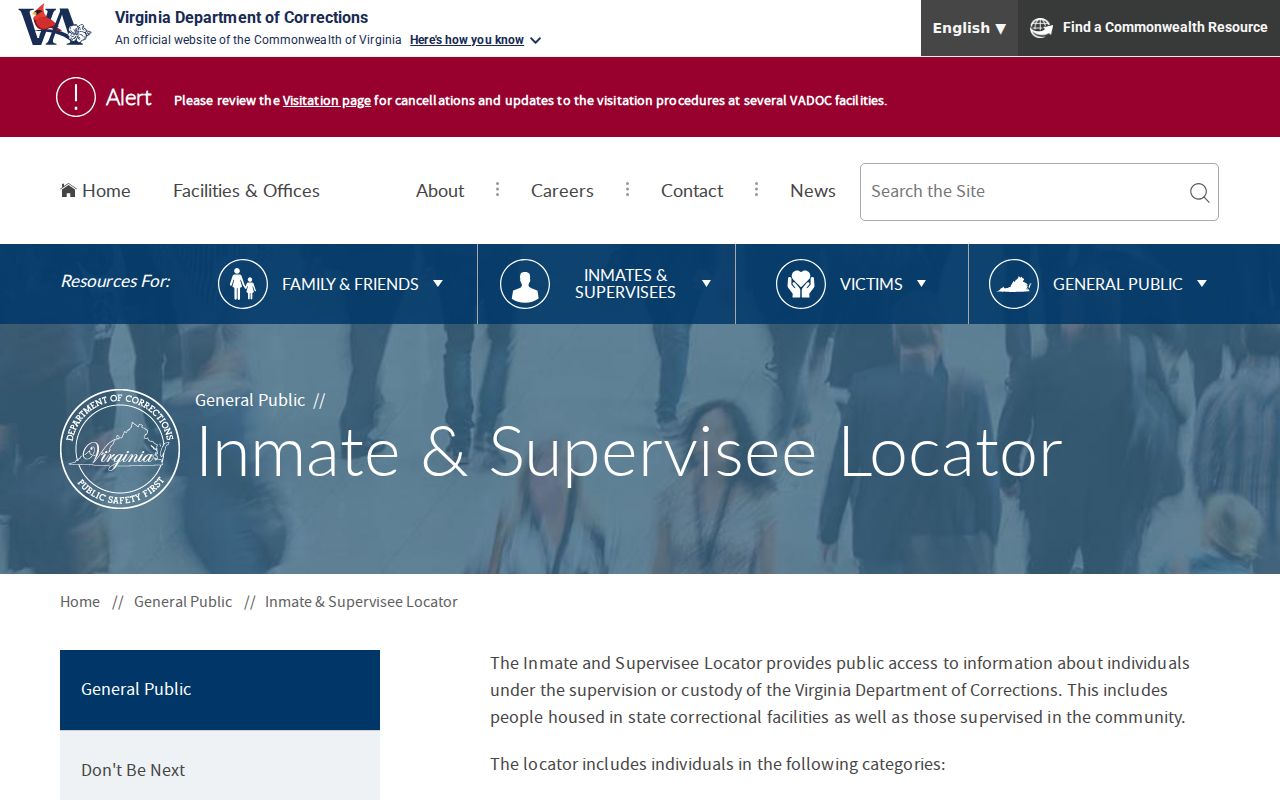
The locator is a state custody and supervision source, not a substitute for calling Loudoun’s jail about a recent booking.
The VADOC facilities and offices directory identifies the proper supervision office.

Use the listed office to confirm a status rather than contacting the person named in a supervision result.
Loudoun Warrant Record Fallbacks
No verified public LCSO active-warrant name database was found. Call LCSO at 703-777-0407, identify the issuing court, and check OCIS for an event tied to the case. Releasable information may also be requested through the sheriff portal. A town police department should be contacted when its officers own the matter. Unserved investigative warrants, sealed process, and juvenile records may not be public.
Anyone resolving their own warrant should obtain the case and issuing-court details, consult counsel, arrange a lawful appearance or surrender, keep the written disposition or release, and confirm that agency systems updated. Do not pay a caller who demands gift cards or cryptocurrency for an alleged warrant. LCSO warnings state that Virginia law enforcement does not call to collect an outstanding-warrant fine.
Loudoun Criminal Records Geography
Loudoun County had a 2025 Census estimate of 449,749 residents across about 520 square miles. Dense eastern communities and western towns do not share one police records counter. Ashburn and Sterling are large census-designated places, not incorporated towns with their own municipal departments, so incidents there usually begin with LCSO. Leesburg, Purcellville, and Middleburg maintain police departments and keep the reports their officers create.
Local police records still feed a county and state path. Adults are generally booked at the Loudoun ADC. Charges move through Virginia’s Loudoun courts, not separate town criminal courts. The official Loudoun County gateway provides a broad agency starting point.
The government gateway is useful for separating town, sheriff, court, and county administrative offices.
Loudoun Parole Record Authority
The Virginia Parole Board decides eligible discretionary parole matters, while VADOC administers community supervision. A public docket may show that probation was imposed, but it will not reveal confidential officer notes, treatment records, tests, protected addresses, or victim and security information. The public locator is a lead that should be checked with the listed district office.
The Virginia Parole Board publishes its authority and proceedings.

This statewide layer is separate from a Loudoun court sentence entry and from day-to-day VADOC supervision.
Loudoun County Criminal Records by City
Loudoun’s three largest incorporated towns are Leesburg, Purcellville, and Middleburg. Each town police department controls the incident reports its officers create, while adult booking and court records move into county systems. Search OCIS under Loudoun, not a municipal criminal court, and send the narrative request to the originating police department.
Leesburg Criminal Records
County seat with a police Records Section and an in-person offense-verification process.
Purcellville Criminal Records
Town police records use the Purcellville FOIA channel and official annual reports.
Middleburg Criminal Records
Town police maintain local narratives; Loudoun courts and ADC hold the later records.
Town lines matter. A mailing address alone does not establish which law enforcement agency wrote the report.